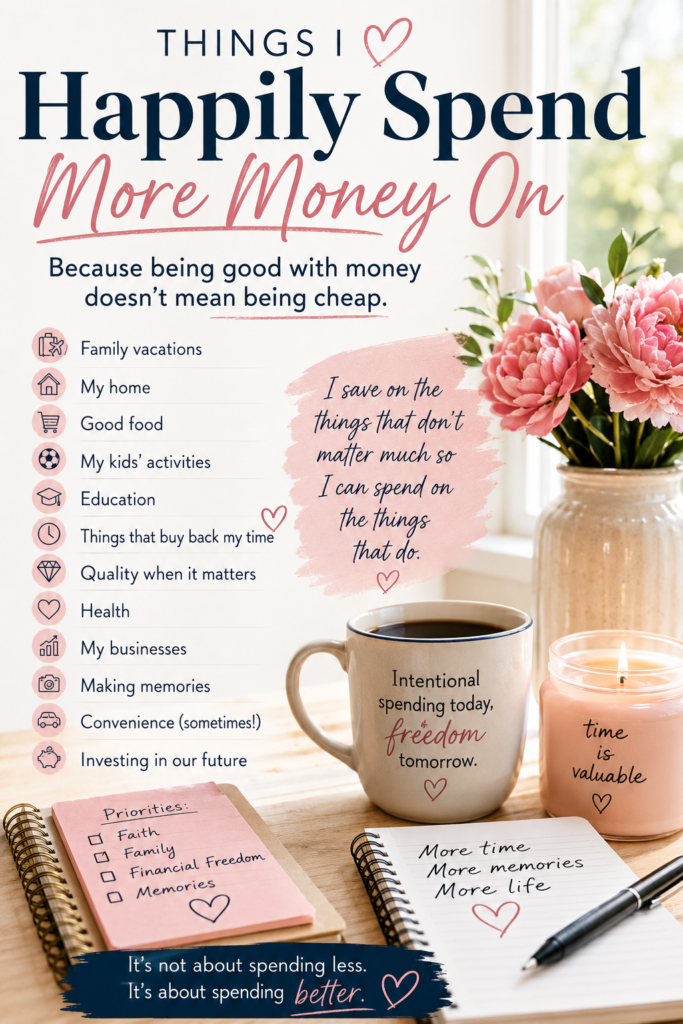
Because Being Good With Money Doesn’t Mean Being Cheap
I recently wrote about the 15 things I refuse to spend money on.
I don’t buy coffee out regularly. I don’t spend a fortune on my kids’ clothes. We use hand-me-downs. I shop at Aldi. I don’t believe my kids need a brand-new backpack every September just because a new school year started.
But here’s the other side of that story:
There are some things I will happily spend more money on.
Being financially responsible doesn’t mean spending the least amount of money possible.
To me, financial independence means being intentional. I save aggressively on the things that don’t matter much to me so I can spend freely on the things that do.
Here are the things I’m happy to pay more for.
1. Family Vacations
I will wear the inexpensive clothes and drink coffee from my kitchen all year long if it means I can take my family somewhere amazing.
Traveling with kids isn’t cheap. Hotels, airfare, food, activities—it adds up quickly.
But some of my favorite memories with my family have happened while we were away together.
My kids aren’t going to remember whether their shirt came from Walmart or a designer store.
They probably will remember swimming in the ocean, staying up too late on vacation, going on rides, exploring somewhere new and having Mom and Dad completely present with them.
Experiences are one category where I’m happy to spend.
2. My Home
I’m willing to spend money making our home somewhere we genuinely enjoy being.
That doesn’t mean constantly redecorating or replacing perfectly good furniture because a new trend came along.
But I’ll spend money on improvements that make our home more comfortable, functional or valuable.
We spend a huge portion of our lives at home. I want ours to be somewhere my family loves coming back to.
3. Good Food
This probably sounds funny coming from someone who loves Aldi.
But shopping inexpensively doesn’t mean buying bad food.
I’ll absolutely spend more on quality meat, seafood, fresh produce or something special that my family really enjoys.
I’ll save $4 by making my coffee at home and then turn around and spend $30 on good steaks.
That’s personal finance.
Spend according to your priorities—not someone else’s.
4. My Kids’ Activities
Sports, lessons, camps and activities can get expensive quickly when you have children.
But I’m generally willing to spend money on something my kids genuinely love and participate in.
They’re learning skills, building confidence, making friends and creating childhood memories.
I don’t believe children need to participate in every activity imaginable, but when they’ve found something they truly love, I’m willing to invest in it.
5. Education
Education is one area where I don’t automatically choose the cheapest option.
That doesn’t necessarily mean paying for the most expensive school or program.
It means that when education, training, a certification, a course or even a book can legitimately improve someone’s future, I’m willing to consider the investment.
Knowledge can continue paying you back for decades.
6. Things That Buy Me Back Time
I’ve changed my thinking about this one as I’ve gotten older.
Sometimes paying someone else to do something is worth every penny.
House cleaning. Landscaping. Grocery pickup. Business services. Hiring help.
If spending $100 gives me several hours back that I can spend with my family, working, resting or doing something I’m considerably better at, that can be an excellent use of money.
Time has value too.
And unlike money, I can’t earn more of it.
7. Quality When Quality Actually Matters
I’m not paying three times as much for something just because there’s a fancy logo on it.
But I will pay more when buying the better product means I’ll use it longer.
A $150 item that lasts 10 years can be considerably cheaper than repeatedly replacing a $50 version.
There’s a difference between expensive and good value.
8. Health
There are plenty of places where I’m willing to bargain hunt.
My family’s health isn’t one of them.
Good medical care, dental care, preventative care, exercise, nutritious food and other things that genuinely contribute to our health are worth spending money on.
You can build all the wealth in the world, but you also want to be healthy enough to enjoy it.
9. My Businesses
I’ll spend money when I genuinely believe an investment will help a business make more money, become more efficient or reduce headaches.
Good equipment.
Software.
Professional services.
Marketing.
Employees.
Education.
Sometimes the frugal decision in business is actually to spend the money.
Trying to save $1,000 can become very expensive if it costs you $10,000 in lost productivity or opportunity.
10. Convenience—Sometimes
I’m not paying a convenience fee simply because I’m lazy.
But there are seasons of life when convenience is worth buying.
When work is crazy, the kids have activities, the calendar is packed and I’m juggling a million things, paying a little more to make life easier can be worth it.
The key is that convenience should be intentional, not your default setting.
11. Making Memories
Birthday parties.
Christmas traditions.
A spontaneous family outing.
Dinner somewhere special.
Taking the kids somewhere they’ve been dying to go.
I’m willing to spend money creating memories.
That doesn’t mean every birthday needs to cost thousands of dollars or every weekend needs an expensive activity.
But I’m not going to spend my entire life accumulating money and forget to actually live along the way.
12. Investing
Technically, this isn’t “spending.”
But it’s probably the category I’m happiest to put money toward.
There isn’t an immediate dopamine hit from transferring money into an investment account.
There’s no package arriving on the porch.
But I’m buying something much bigger:
future freedom.
Every dollar invested today is a little piece of my future that I’m buying back.
The Point Isn’t to Spend Less. It’s to Spend Better.
I think this is where frugality sometimes gets misunderstood.
I don’t want the cheapest life possible.
I want the best life possible for the money I’m willing to spend.
I’ll make my coffee at home.
I’ll shop at Aldi.
I’ll happily put my kids in hand-me-downs.
I’ll use something until it actually needs replacing.
And then I’ll turn around and spend thousands of dollars taking my family somewhere we’ll remember forever.
Those decisions aren’t contradictory.
They’re the entire point.
Financial independence isn’t about saying no to everything you want.
It’s about figuring out what you don’t care about, spending less there, and using that money to build the life you actually want.
And one last thing…
Just because I’m willing to spend money on something doesn’t mean you should be.
Personal finance is personal.
Maybe designer clothes bring you tremendous joy. Maybe you couldn’t care less about traveling. Maybe you’d rather drive an incredible car and live in a smaller house.
That’s okay.
The goal isn’t to copy someone else’s spending habits.
The goal is to be able to look at where your money goes and say:
“Yes. That’s exactly what I want my money to do for me.”