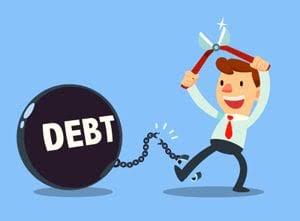
When people think about building wealth, achieving financial independence, or becoming financially free, they often focus on investing, retirement accounts, and passive income. While those are all important pieces of the puzzle, there’s one financial obstacle that can quietly destroy your progress:
High-interest credit card debt.
If you’re carrying large credit card balances, especially at today’s interest rates of 20% to 30% or more, it becomes incredibly difficult to build wealth because your money is working harder for the credit card companies than it is for you.
Why Credit Card Debt Is So Dangerous
Credit cards can be a useful financial tool when paid off in full each month. However, carrying a balance can quickly become expensive.
Let’s say you have:
- $10,000 in credit card debt
- 25% interest rate
That balance alone could cost you approximately $2,500 per year in interest.
Think about that.
That’s $2,500 that could have been invested in an index fund, contributed to a Roth IRA, used for a family vacation, or put toward achieving financial freedom.
Instead, it’s going to the bank.
Credit Card Debt and Financial Independence Don’t Mix
One of the biggest mistakes people make is trying to invest aggressively while carrying high-interest debt.
If your credit card charges 25% interest, paying off that debt is essentially earning a guaranteed 25% return on your money.
That’s a return very few investments can consistently provide.
Before focusing heavily on investing, it’s often wise to tackle high-interest debt first.
Call Your Credit Card Company
Many people don’t realize they can negotiate.
If you’ve been a loyal customer with a good payment history, call your credit card company and ask:
- Can my interest rate be reduced?
- Are there any promotional offers available?
- Do you have hardship programs?
- Are there lower-interest products available?
The worst they can say is no.
Even reducing your rate by a few percentage points can save hundreds or thousands of dollars over time.
Consider a Balance Transfer
Another strategy is a balance transfer credit card.
Many cards offer:
- 0% introductory interest
- Promotional periods of 12 to 21 months
- Lower interest rates than existing cards
A balance transfer can provide breathing room and allow more of your payment to go toward principal instead of interest.
Before transferring, be sure to:
- Review transfer fees
- Understand the promotional period
- Have a plan to aggressively pay down the balance
A balance transfer isn’t a solution by itself. It’s simply a tool.
The Avalanche Method
The Debt Avalanche Method focuses on mathematics.
Here’s how it works:
- Make minimum payments on all debts.
- Put every extra dollar toward the debt with the highest interest rate.
- Once that debt is paid off, move to the next highest interest rate.
Example
- Credit Card A: $5,000 at 29%
- Credit Card B: $8,000 at 22%
- Car Loan: $15,000 at 6%
You would focus all extra payments on Credit Card A first.
Pros
- Saves the most money in interest.
- Pays off debt fastest mathematically.
- Best overall financial outcome.
Cons
- It can take longer to see early wins.
The Snowball Method
The Debt Snowball Method focuses on psychology.
Here’s how it works:
- Make minimum payments on all debts.
- Put every extra dollar toward the smallest balance.
- Once that balance is gone, roll the payment into the next smallest debt.
Example
- Credit Card A: $1,000
- Credit Card B: $5,000
- Car Loan: $15,000
You would eliminate the $1,000 balance first regardless of interest rate.
Pros
- Creates quick wins.
- Builds momentum.
- Helps people stay motivated.
Cons
- Typically costs more in interest over time.
Avalanche vs Snowball: Which Is Better?
The answer depends on your personality.
If you’re highly disciplined and motivated by numbers:
The Avalanche Method is usually the best choice.
If you need quick wins to stay engaged:
The Snowball Method may be more effective.
The most important thing isn’t which method you choose.
The most important thing is choosing one and sticking with it.
My Recommendation
If your goal is financial independence, I generally recommend:
- Stop adding new credit card debt.
- Build a small emergency fund.
- Call your credit card companies to negotiate lower rates.
- Explore balance transfer opportunities.
- Attack high-interest debt aggressively using the Avalanche Method.
- Once high-interest debt is eliminated, redirect those payments toward investing.
Imagine paying off a $500 monthly credit card payment and then investing that same $500 into an index fund every month instead.
That’s how wealth is built.
Final Thoughts
Building wealth isn’t just about earning more money. It’s about keeping more of the money you already earn.
High-interest credit card debt can quietly steal thousands of dollars every year and delay your journey toward financial freedom.
The sooner you eliminate it, the sooner your money can start working for you instead of the credit card companies.
If you’re serious about financial literacy, financial independence, and long-term wealth building, few financial moves are more powerful than eliminating high-interest debt and redirecting those payments toward your future.