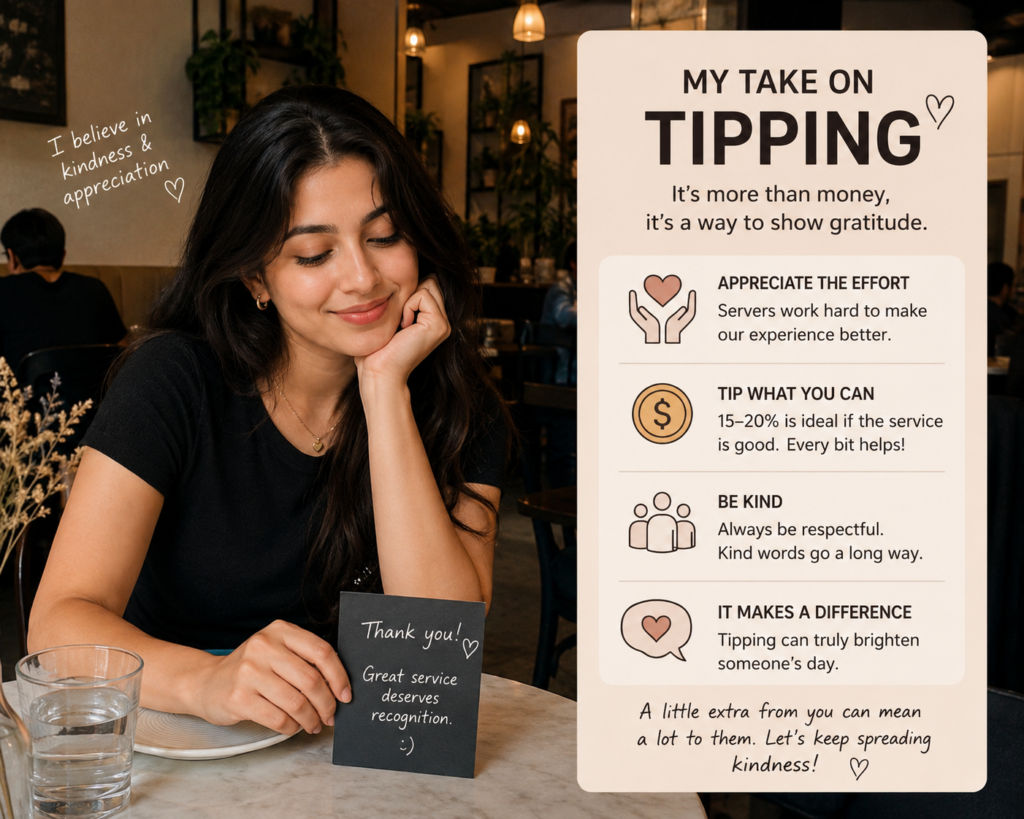
Tipping culture in America has changed dramatically over the last few years. Everywhere you go, from coffee shops to self-checkout kiosks, it seems like someone is turning an iPad around and asking for a tip. As consumers focused on smart money management and financial independence, many people are wondering: How much should you tip, and when is tipping actually appropriate?
The truth is, tipping should reward service—not every transaction.
When Should You Tip?
Generally speaking, tipping is appropriate when someone has provided a service that goes above simply ringing up your purchase. Traditional tipping situations still make sense and help support workers who rely on gratuities as part of their income.
Sit-Down Restaurants
For full-service restaurants, 20% has become the standard tip for good service. Your server takes your order, refills drinks, checks on your table, and ensures you have a pleasant dining experience.
- Excellent service: 20-25%
- Good service: 20%
- Average service: 15-18%
- Poor service: Adjust accordingly
Tipping for Takeout
Takeout orders require less service than dining in, so many people choose to tip less.
A reasonable guideline:
- No tip required
- 5-10% for larger or complicated orders
- A few dollars for exceptional service
Picking up your own food doesn’t require the same level of service as having a dedicated server waiting on your table.
Tipping at Bars
One area where tipping culture has changed significantly is at bars. Instead of automatically tipping 20% of the entire tab, many people still follow the traditional approach:
- Beer or wine: $1 per drink
- Cocktails: $1-$2 per drink
For most situations, this provides fair compensation without turning a few drinks into an unexpectedly expensive evening.
Quick Service and Counter Service: Is a Tip Necessary?
This is where many consumers feel tipping culture has gone too far.
Ordering a coffee, frozen yogurt, bagel, or sandwich from a counter and then seeing suggested tips of 20%, 25%, or even 30% can feel excessive. In many of these situations, no additional service is being provided beyond the transaction itself.
It’s perfectly acceptable to select “No Tip” when:
- Ordering at a counter
- Buying retail merchandise
- Picking up a coffee
- Using self-service kiosks
- Purchasing grab-and-go food
Remember: You are paying for the product already.
The Rise of the “iPad Spin”
Technology has made tipping requests more common than ever. Point-of-sale systems automatically prompt customers for gratuities, even when little or no service has been provided.
Just because the screen asks for a tip doesn’t mean you’re obligated to leave one.
Consumers should not feel guilty for declining gratuity when no additional service has been performed.
When Tipping Makes Sense
Tipping remains appropriate for service-based professions such as:
- Waitstaff
- Bartenders
- Hair stylists
- Nail technicians
- Food delivery drivers
- Valet attendants
- Hotel housekeeping
- Movers
- Tour guides
In these situations, the tip reflects the quality of service received.
Smart Money Tips for Managing Tipping Expenses
If you’re working toward financial freedom, practicing intentional spending matters.
Budget for Tipping
Include gratuities in your dining and entertainment budget so they don’t become surprise expenses.
Don’t Tip Out of Guilt
Generosity is wonderful, but financial decisions should be intentional—not driven by social pressure.
Reward Great Service
Exceptional service deserves recognition. Tipping is meant to reward effort, professionalism, and attentiveness.
Final Thoughts
Tipping culture has expanded far beyond its original purpose. While tipping remains an important way to reward quality service, consumers shouldn’t feel obligated to tip during every simple purchase or transaction.
At the end of the day, tipping should be based on service—not guilt.
As you work toward financial independence and building wealth, remember that being intentional with your money doesn’t make you cheap. It makes you thoughtful. And thoughtful spending is one of the foundations of long-term financial success.